Do people need food supplements?
By Lukas Schorn
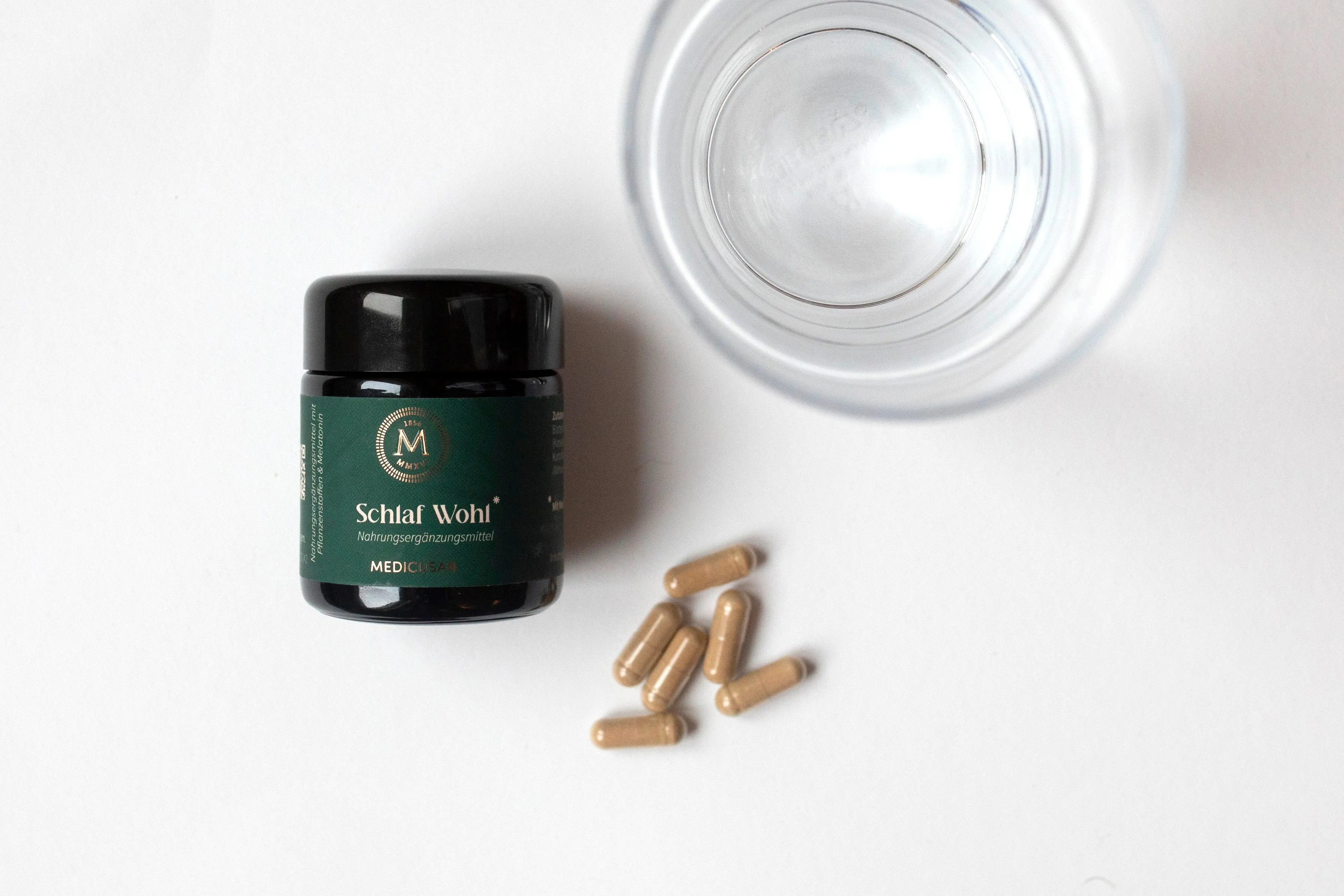
More than 15 years ago, pictures of the pill-swallowing American went around the world: a jar full of food supplements. Back then we still laughed about it, but today it is a common sight in our part of the world too. Food supplements are finding their way into more and more households here. But how important are food supplements really?
Few topics divide opinion as strongly as this one: is a balanced and healthy diet enough to cover our need for all vitamins, micronutrients and minerals, or should we give our body, and above all our health, a helping hand with food supplements? Hand on heart: even with the best intentions and efforts, do you manage the recommended minimum of five portions of fruit and vegetables every day? If not, you are in the same boat as around 86.9% of all Germans, who eat too few vegetables and therefore do not cover their vitamin requirements. But eating habits are not the only thing that matters: factors such as allergies or intolerances, highly processed foods, stress or taking medication (including the contraceptive pill) make an additional, increased intake of vitamins and minerals just as necessary as sport does.
This is where food supplements come in: products that contain vitamins, minerals, proteins, microorganisms, enzymes and other nutrients and plant substances, that are available in various forms such as tablets, capsules, powders or liquids, and that help to close these gaps. Certain food supplements, for example, can help to improve general wellbeing, to promote physical and mental performance and to prevent (chronic) illnesses that can be traced back to years of vitamin deficiency.
Vitamins & co. and their health-promoting properties. Probably one of the most common examples is vitamin C, which is widely known for its immune-boosting properties and can help to prevent colds and infections. Omega-3 fatty acids, on the other hand, can support heart health and reduce inflammation in the body. Antioxidants such as vitamin E and selenium can help to reduce cell damage and lower the risk of chronic diseases. Vegetarians and vegans, in turn, benefit from vitamin B12 or iron supplements, as these nutrients are found mainly in animal products. And countless blog articles could be written about vitamin D, which cannot be absorbed from food but is only formed through sunlight.
So there are plenty of good reasons to take a closer look at your own lifestyle and to listen to your body. Even though, in the medical sense, an acute deficiency is only spoken of once an extreme such as scurvy (vitamin C deficiency) or loss of vision (vitamin A deficiency) has been reached, an increased need for vitamins or minerals shows itself much earlier and in various forms. The spectrum ranges from constant tiredness despite sufficient sleep and rest, sleep disorders and problems concentrating, to impaired wound healing, depressive moods, weak muscles and susceptibility to infections.
Holistic & complex. What all these symptoms have in common is that they are multifactorial problems, meaning they are influenced by many individual circumstances such as diet, exercise, sleep, stress levels and so on. To turn the right dials here, a holistic approach to the body and to health makes sense: one that not only addresses acute deficiencies but also relies on a combination of different active ingredients and plant substances that is as smart as it is innovative, in order to support and strengthen body and mind effectively and, above all, holistically. Especially with regard to these holistic modes of action, it is particularly important to find the right product and the right experts behind it, because not every food supplement lives up to its promises.
Whether a jar full of pills is necessary remains to be seen. But provided the ingredients are of the highest quality and the raw materials are neither underdosed nor (and this is far more worrying) overdosed, food supplements can definitely make an important contribution to your body and your wellbeing, and are therefore certainly an investment that is always worthwhile.
We warmly recommend the following specialist articles & studies for further reading on this topic:
- https://www.zentrum-der-gesundheit.de/krankheiten/weitere-erkrankungen/mangelerscheinungen/vitaminmangel (opens in a new tab)
- Cunningham-Rundles, S. & Ho Lin, D. (2007): Malnutrition and infection in industrialized countries. doi:10.1007/978-3-7643-8099-1_5
- Straßburg A. et al. (2019): Comparison of food consumption and nutrient intake assessed with three dietary assessment methods: results of the German National Nutrition Survey II, European Journal of Nutrition, 58, 193–210, 2019, https://doi.org/10.1007/s00394-017-1583-z (opens in a new tab).
- Troesch B. (2012): Dietary surveys indicate vitamin intakes below recommendations are common in representative Western countries. Br J Nutr. 2012 Aug;108(4):692-8. doi: 10.1017/S0007114512001808.
- Whatham A. et al. (2008): Vitamin and mineral deficiencies in the developed world and their effect on the eye and vision. Ophthalmic Physiol Opt. 2008 Jan;28(1):1-12. doi: 10.1111/j.1475-1313.2007.00531.x.